
Back to Health Blogs
Health Tips and Blogs

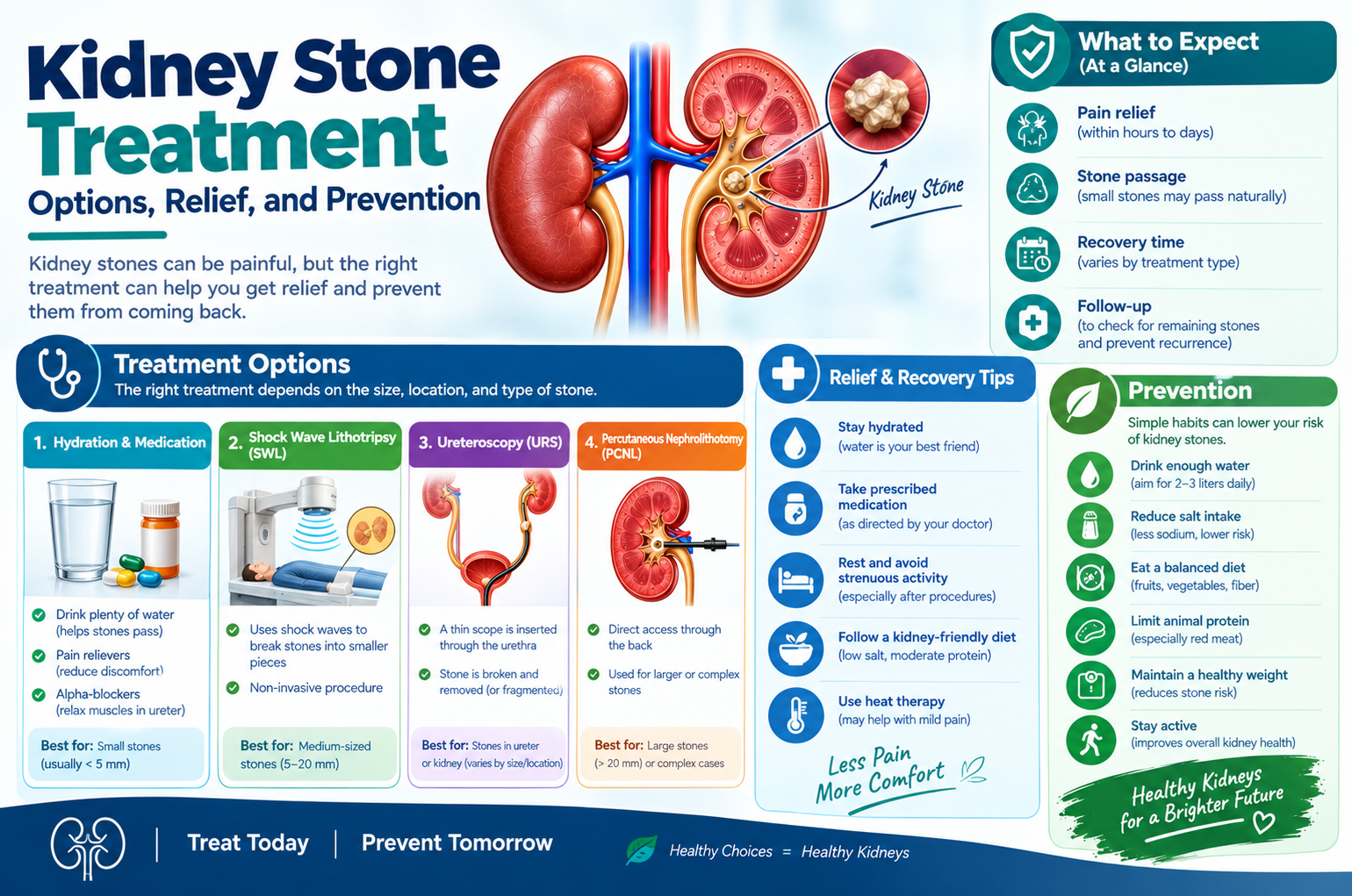
Kidney Stone Treatment - Options, Relief, and Prevention

5 min read
A
Written ByAdmin
Kidney Stone Treatment - Options, Relief, and Prevention

Kidney stones are hard deposits of minerals and salts that form in the kidneys. They can cause intense pain, nausea, blood in the urine, and urinary problems.

Understanding kidney stone treatment is crucial to relieve pain, prevent complications, and reduce the risk of recurrence. This guide covers medical treatments, surgical procedures, home remedies, and prevention strategies.

All information is based on credible sources like Mayo Clinic, Cleveland Clinic, and NIH, ensuring accuracy, safety, and reliability.

Understanding Kidney Stones

Kidney stones vary in size, composition, and location.

  • Calcium stones: Most common; made of calcium oxalate.
  • Uric acid stones: Formed due to high uric acid levels.
  • Struvite stones: Associated with infections.
  • Cystine stones: Rare, hereditary stones.

Symptoms may include:

  • Severe flank or back pain
  • Pain radiating to the groin
  • Frequent urination or urgency
  • Blood in urine (hematuria)
  • Nausea and vomiting

When Treatment is Needed

Not all kidney stones require immediate intervention. Treatment is typically recommended if:

  • The stone is large (>5mm) and unlikely to pass naturally
  • Causes persistent or severe pain
  • Leads to urinary obstruction or infection
  • Repeated stones form frequently

Small stones may pass on their own with hydration and medication, while larger stones often require medical procedures.

Medical Treatment for Kidney Stones

Pain Relief Medications

Kidney stone pain, known as renal colic, can be intense. Pain management includes:

  • NSAIDs: Ibuprofen or naproxen
  • Acetaminophen: For mild pain
  • Prescription opioids: In severe cases

Tip: Always use pain medication under medical supervision.

Medications to Help Stone Passage

Certain drugs relax the ureter and aid stone passage:

  • Alpha-blockers (e.g., tamsulosin): Reduce ureter spasms
  • Calcium channel blockers: Occasionally used to ease stone movement

These medications are especially useful for stones between 5 and 10 mm in size.

Antibiotics for Infection

If kidney stones cause urinary tract infections, antibiotics are essential:

  • Trimethoprim-sulfamethoxazole
  • Ciprofloxacin or other doctor-prescribed antibiotics

Prompt treatment prevents kidney damage and sepsis.

Procedures and Surgical Options

When stones do not pass naturally, doctors may recommend minimally invasive or surgical procedures.

Shock Wave Lithotripsy (SWL)

  • How it works: Uses high-energy shock waves to break stones into smaller pieces.
  • Best for: Stones in kidney or upper ureter.
  • Recovery: Usually outpatient; mild bruising or discomfort.

Ureteroscopy

  • How it works: A thin scope enters the ureter to remove or break stones.
  • Best for: Mid-ureter or lower-ureter stones.
  • Advantages: High success rate; minimal recovery time.

Percutaneous Nephrolithotomy (PCNL)

  • How it works: A small incision is made in the back to remove large stones directly from the kidney.
  • Best for: Stones >2 cm or complex stones.
  • Recovery: Hospital stay 1–2 days; full recovery in a few weeks.

Note: The choice of procedure depends on stone size, location, and patient health.

Home Remedies and Lifestyle Measures

Hydration and Fluid Intake

  • Drink 2–3 liters of water daily.
  • Staying hydrated helps flush small stones naturally.

Dietary Adjustments

  • Reduce salt intake to lower calcium stone risk.
  • Limit high-oxalate foods: Spinach, nuts, and chocolate.
  • Moderate animal protein: Excess increases uric acid.

Physical Activity

  • Gentle exercise can aid stone movement.
  • Avoid high-intensity workouts during acute pain.

These measures support medical treatment and may help stones pass faster.

Prevention of Future Kidney Stones

  • Maintain adequate hydration
  • Follow a balanced, low-salt diet
  • Monitor calcium and oxalate intake
  • Regular kidney function check-ups
  • Manage underlying conditions: Diabetes, gout, high blood pressure

According to the NIH, patients who follow preventive measures have a 50% lower risk of recurrence.

Kidney stone treatment involves a combination of pain relief, medications, minimally invasive procedures, and lifestyle adjustments.

Recognizing symptoms early and consulting a qualified urologist ensures effective relief and reduces the risk of recurrence.

With proper hydration, diet, and preventive care, most patients can manage kidney stones safely and maintain healthy kidney function.

Medical Disclaimer

This article is for educational purposes only. It does not replace professional medical advice, diagnosis, or treatment.

Always consult a licensed healthcare provider if you suspect kidney stones or experience severe pain.

Frequently Asked Questions

Common questions about this health blog answered for you

1. Small stones: a few days to 2–3 weeks. 2. Larger stones: may require medical procedures.

Small stones may pass with hydration, diet, and pain management, but larger stones need medical intervention.

1. Depends on the stone size and location. 2. SWL is common for small stones; PCNL is for large stones.

No. Many stones pass naturally. Surgery is for obstruction, severe pain, or infection.

Untreated stones that block urine flow or cause infection can damage the kidneys. Early treatment prevents complications.

Need Medical Consultation?

Our expert doctors are here to help you with personalized care.

Book Appointment
Kidney Stone Treatment - Options, Relief, and Prevention | Nephro Care India