
Back to Health Blogs
Health Tips and Blogs

Chronic Kidney Disease (CKD) - Causes, Stages, Symptoms & Treatment

5 min read
A
Written ByAdmin
Chronic Kidney Disease (CKD) - Causes, Stages, Symptoms & Treatment

Imagine your kidneys, two bean-shaped organs, silently working 24/7 to clean your blood.

When they stop functioning properly, toxins and fluid start building up, leading to what’s known as chronic kidney disease (CKD).

CKD develops slowly over time, often without obvious symptoms. Millions of people worldwide have it, and most don’t even realize it until significant damage occurs.

This comprehensive guide will help you understand what CKD is, its causes, stages, symptoms, treatment, and prevention, empowering you to take control of your kidney health before it’s too late.

What Is Chronic Kidney Disease?

Chronic kidney disease (CKD) is a long-term medical condition in which the kidneys gradually lose their ability to filter waste and excess fluid from the blood.

When kidney function declines, waste accumulates, causing systemic health issues affecting your heart, bones, and overall well-being.

CKD differs from acute kidney injury (AKI) which occurs suddenly as CKD progresses slowly over months or years.

According to the National Kidney Foundation (NKF), CKD is defined as kidney damage or an eGFR (estimated glomerular filtration rate) below 60 mL/min/1.73 m² lasting more than 3 months.

How Common Is CKD?

CKD is a global health concern:

  • About 850 million people worldwide are affected (World Health Organization, 2023).
  • In India, approximately 1 in 11 adults shows signs of CKD.
  • The Centers for Disease Control and Prevention (CDC) estimates that 37 million Americans have CKD, yet 90 % are undiagnosed.

Early detection through regular kidney function testing can prevent complications such as end-stage kidney failure.

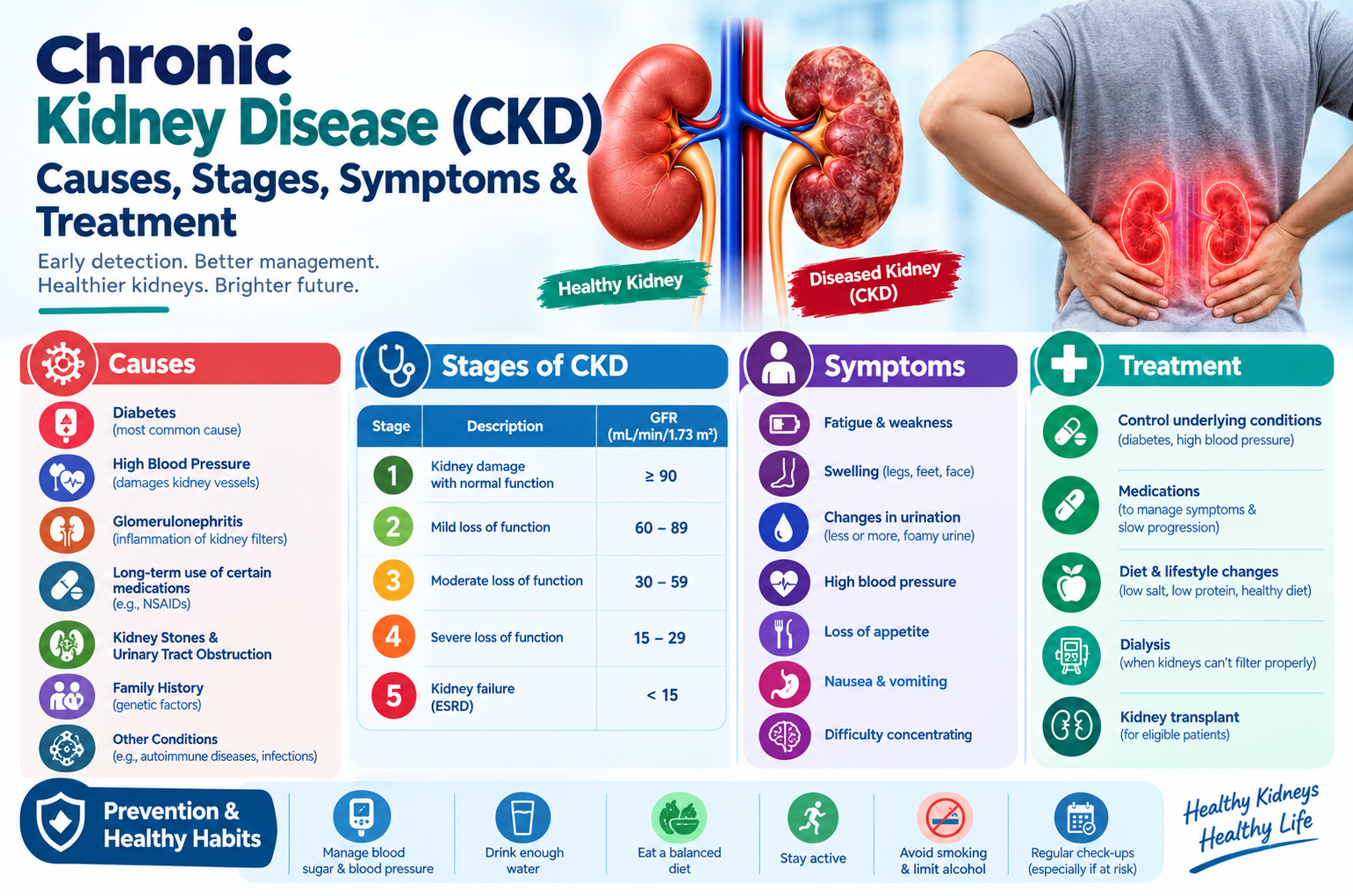
Causes of Chronic Kidney Disease

CKD can stem from multiple factors. The two leading causes are diabetes and high blood pressure, responsible for almost two-thirds of all cases.

1. Diabetes (Diabetic Nephropathy)

High blood sugar damages the small blood vessels in the kidneys, impairing filtration.

Long-term, this leads to protein leakage (albuminuria) and reduced kidney performance.

2. Hypertension (High Blood Pressure)

Persistent high blood pressure puts strain on the kidney arteries, reducing their ability to remove waste.

3. Glomerulonephritis

Inflammation of the kidney filtering units (glomeruli) caused by autoimmune diseases or infections.

4. Polycystic Kidney Disease (PKD)

A genetic disorder causing fluid-filled cysts that enlarge and damage the kidneys.

5. Obstructive Conditions

Chronic urinary obstruction from kidney stones, prostate issues, or tumors.

6. Repeated Kidney Infections (Pyelonephritis)

Can cause scarring and permanent kidney damage.

Stages of Chronic Kidney Disease

CKD is classified into five stages based on the eGFR value (a measure of kidney function).

Stage

eGFR (mL/min/1.73 m²)

Kidney Function

Description

Stage 1

≥ 90

Normal

Minor damage; kidneys work well

Stage 2

60–89

Mild loss

Early kidney disease signs

Stage 3a

45–59

Mild-moderate

May show symptoms

Stage 3b

30–44

Moderate-severe

Waste buildup begins

Stage 4

15–29

Severe

High risk of kidney failure

Stage 5

< 15

Failure

End-stage kidney disease (ESKD)

(Source: National Institute of Diabetes and Digestive and Kidney Diseases – NIDDK)

Symptoms of Chronic Kidney Disease

CKD often goes unnoticed in its early stages.

As the condition progresses, the following symptoms may appear:

  • Fatigue and weakness
  • Swelling in ankles, feet, or face (edema)
  • Changes in urination (frequency, color, or foaming)
  • Shortness of breath
  • Nausea or vomiting
  • Loss of appetite
  • Itchy skin
  • Muscle cramps, especially at night
  • Difficulty concentrating

If you notice these signs, consult a nephrologist immediately for evaluation.

Diagnosis: How CKD Is Detected

1. Blood Tests

  • Serum Creatinine & eGFR: Measure kidney filtering efficiency.
  • BUN (Blood Urea Nitrogen): Detects waste buildup.

2. Urine Tests

  • Urine Albumin-to-Creatinine Ratio (UACR): Detects protein leakage.
  • Urinalysis: Screens for infection, sugar, or blood.

3. Imaging Tests

  • Ultrasound, CT, or MRI to assess kidney size, cysts, or obstruction.

4. Kidney Biopsy

  • Microscopic examination to confirm underlying causes (e.g., glomerulonephritis).

Treatment Options for CKD

CKD has no complete cure, but early management can slow its progression and prevent kidney failure.

Lifestyle and Diet Management

  • Control Blood Sugar: Keep HbA1c below 7 %.
  • Monitor Blood Pressure: Target < 130/80 mm Hg.
  • Eat a Kidney-Friendly Diet:
  • Limit sodium (< 2 g/day).
  • Reduce protein intake (consult a dietitian).
  • Restrict phosphorus (avoid soft drinks, dairy).
  • Eat more fruits like apples, berries, and grapes.
  • Avoid Smoking & Alcohol.
  • Stay Hydrated: Drink adequate water unless restricted by your doctor.

Medications

Doctors may prescribe:

  • ACE inhibitors / ARBs – lower blood pressure and protect the kidneys.
  • SGLT2 inhibitors – beneficial for diabetics with CKD.
  • Phosphate binders – control mineral imbalance.
  • Erythropoietin injections – treat anemia caused by kidney failure.
  • Diuretics – reduce fluid retention.

(Always take medications under medical supervision.)

Dialysis and Transplant

If CKD progresses to Stage 5 (ESKD):

  • Dialysis: Artificial filtration of blood (hemodialysis or peritoneal dialysis).
  • Kidney Transplant: The best long-term treatment for eligible patients.

At advanced centers such as Nephrocare India, nephrologists customize dialysis and transplant plans for each patient’s condition.

Complications of CKD

Unchecked CKD can lead to:

  • Heart disease and stroke
  • Fluid overload (edema)
  • High potassium (hyperkalemia)
  • Bone and mineral disorders
  • Anemia
  • End-stage renal disease (ESRD)

Regular follow-ups and adherence to treatment minimize these risks.

Prevention and Early Detection

Key Prevention Strategies

  1. Manage Diabetes: Regular blood sugar checks.
  2. Control Blood Pressure: Maintain a healthy lifestyle and medication compliance.
  3. Maintain a healthy weight: Exercise 30 minutes daily.
  4. Limit Painkillers: Avoid long-term NSAID use.
  5. Get Regular Kidney Checkups: Especially if you have risk factors.

Who Should Get Screened?

  • People with diabetes or hypertension
  • Individuals with a family history of kidney disease
  • Those over age 60
  • People who use nephrotoxic drugs (certain antibiotics, NSAIDs)

Living with Chronic Kidney Disease

Living with CKD requires consistent care and emotional resilience.

Here’s how to manage effectively:

  • Work with a nephrologist to monitor your kidney function every 3–6 months.
  • Follow a dietitian-approved meal plan for CKD.
  • Join support groups to share experiences.
  • Stay informed: Understanding your disease helps reduce anxiety.
  • Schedule routine tests at accredited diagnostic centers to track progression.

Early intervention and lifestyle control can help you live a long, fulfilling life — even with CKD.

Chronic kidney disease is a silent yet serious condition that affects millions worldwide.

By understanding its causes, stages, and symptoms — and taking proactive steps to manage your health, you can protect your kidneys and prevent complications.

If you have diabetes, high blood pressure, or notice changes in urination, don’t ignore them.

Book a kidney function test and consult a nephrologist at a trusted clinic like Nephrocare India for personalized care.

Medical Disclaimer

This content is for educational purposes only and is not a substitute for professional medical advice.

Always seek the guidance of a qualified healthcare provider regarding any medical condition or treatment.

Frequently Asked Questions

Common questions about this health blog answered for you

CKD cannot be fully cured, but treatment can slow or stop its progression.

Avoid high-salt foods, processed meats, canned soups, and foods rich in potassium and phosphorus unless advised otherwise.

Mild kidney damage (Stage 1–2) can sometimes improve with proper management, but most CKD cases are progressive.

People at risk should get tested once a year. Those diagnosed with CKD may need every 3–6 months.

Need Medical Consultation?

Our expert doctors are here to help you with personalized care.

Book Appointment
Chronic Kidney Disease (CKD) - Causes, Stages, Symptoms & Treatment | Nephro Care India