Back to Health Blogs
Health Tips and Blogs

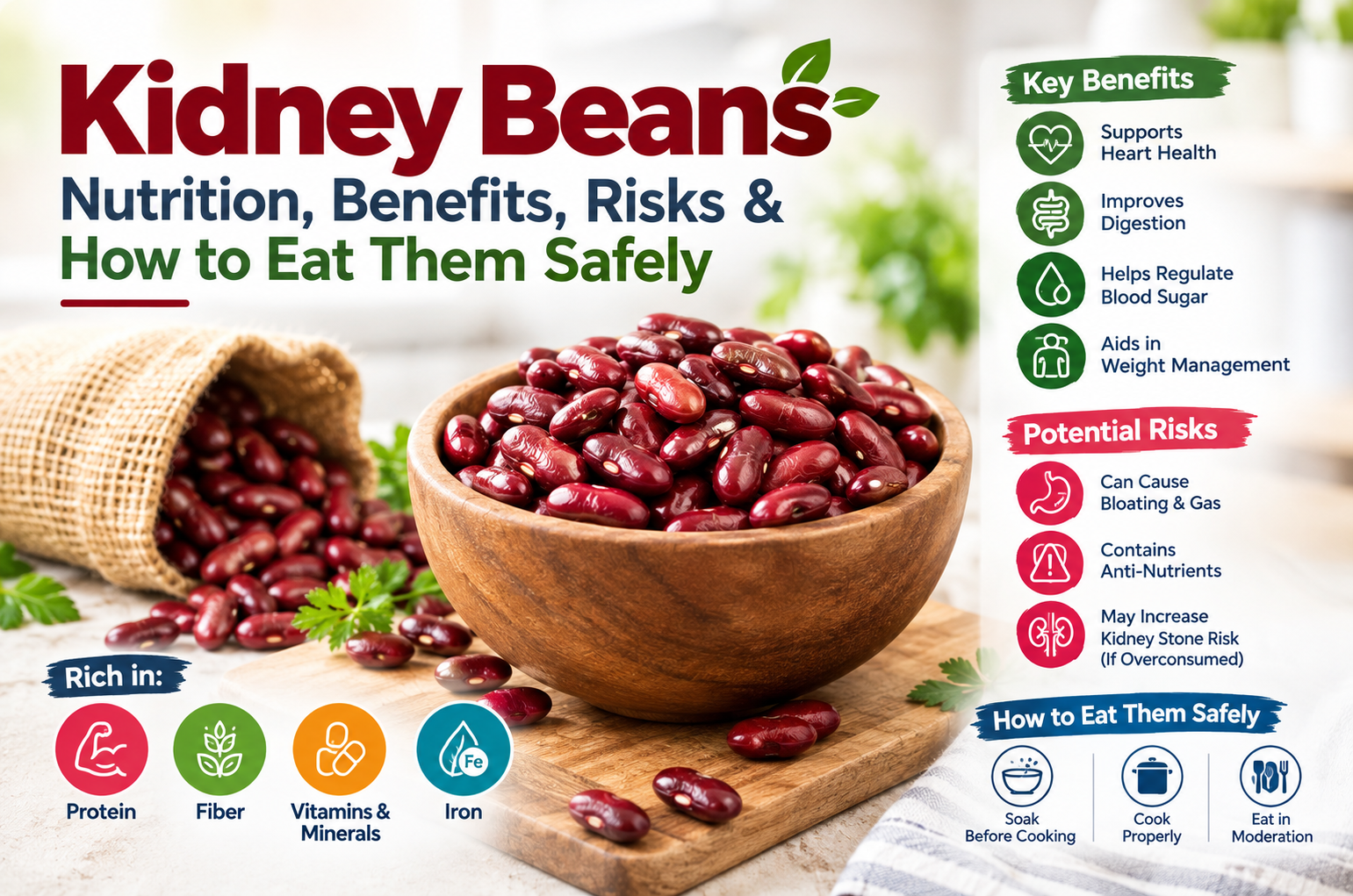
Kidney Beans - Nutrition, Benefits, Risks & How to Eat Them Safely

5 min read
A
Written ByAdmin
Kidney Beans - Nutrition, Benefits, Risks & How to Eat Them Safely

Kidney beans are a pantry staple around the world — found in chili, curries, salads, and rice dishes. But beyond their rich, earthy taste, many people search online asking: Are kidney beans healthy? Can kidney beans be dangerous? Or how should kidney beans be cooked safely?

If you’re looking for clear, medically accurate, and trustworthy information about kidney beans, you’re in the right place.

What Are Kidney Beans?

Kidney beans are a type of legume belonging to the Phaseolus vulgaris family, the same species as black beans and pinto beans. They get their name from their kidney-like shape and deep red color.

They are commonly used in:

  • Latin American cuisine
  • South Asian dishes
  • Mediterranean and Middle Eastern meals

Kidney beans can be found in several forms:

  • Dried kidney beans
  • Canned kidney beans
  • Light red kidney beans
  • Dark red kidney beans

As legumes, kidney beans are valued for their plant-based protein, fiber, and complex carbohydrates.

Nutritional Profile of Kidney Beans

Kidney beans are nutrient-dense and naturally low in fat. According to data from the USDA, one cup (about 170 grams) of cooked kidney beans provides approximately:

  • Calories: ~225 kcal
  • Protein: ~15 grams
  • Carbohydrates: ~40 grams
  • Dietary Fiber: ~13 grams
  • Fat: <1 gram

Key Micronutrients in Kidney Beans

Kidney beans are rich in essential vitamins and minerals, including:

  • Folate (Vitamin B9) – supports red blood cell formation
  • Iron – important for oxygen transport in the blood
  • Magnesium – supports muscle and nerve function
  • Potassium – helps regulate blood pressure
  • Zinc – supports immune function

This nutrient combination makes kidney beans a valuable food for both omnivorous and plant-based diets.

Health Benefits of Kidney Beans

1. Kidney Beans Support Heart Health

Regular consumption of kidney beans may help reduce the risk of cardiovascular disease.

Why?

  • High fiber content helps lower LDL (“bad”) cholesterol
  • Potassium supports healthy blood pressure
  • Low saturated fat content supports heart health

Research published in journals cited by the American Heart Association shows that diets rich in legumes are associated with improved cholesterol levels and reduced heart disease risk.

2. Kidney Beans Help Control Blood Sugar

Kidney beans have a low glycemic index (GI), meaning they release glucose slowly into the bloodstream.

This is especially beneficial for:

  • People with type 2 diabetes
  • Individuals with insulin resistance
  • Those aiming to prevent blood sugar spikes

The soluble fiber in kidney beans slows carbohydrate digestion, which helps maintain stable blood sugar levels.

3. Kidney Beans Improve Digestive Health

Kidney beans are rich in dietary fiber, which:

  • Supports regular bowel movements
  • Feeds beneficial gut bacteria
  • Helps prevent constipation

Fiber fermentation in the colon produces short-chain fatty acids, which are linked to improved gut health and reduced inflammation, according to research referenced by the National Institutes of Health (NIH).

4. Kidney Beans Aid in Weight Management

Kidney beans can help with healthy weight control because they are:

  • High in fiber (promotes fullness)
  • High in protein (reduces appetite)
  • Low in fat

Studies show that meals containing legumes increase satiety and reduce overall calorie intake later in the day.

5. Kidney Beans Provide Plant-Based Protein

For vegetarians and vegans, kidney beans are a valuable plant protein source.

While kidney beans are not a complete protein on their own, combining them with grains (like rice) provides all essential amino acids.

Kidney Beans and Chronic Disease Prevention

Multiple large-scale studies have linked legume consumption with lower risk of chronic diseases, including:

  • Cardiovascular disease
  • Type 2 diabetes
  • Certain cancers (particularly colorectal cancer)

Organizations like the World Health Organization (WHO) and Harvard T.H. Chan School of Public Health encourage regular legume consumption as part of a balanced diet.

Risks and Side Effects of Kidney Beans

Despite their benefits, kidney beans must be prepared properly.

Raw or Undercooked Kidney Beans Can Be Toxic

Raw kidney beans contain phytohaemagglutinin, a type of lectin that can cause food poisoning if not destroyed by proper cooking.

Symptoms may include:

  • Nausea
  • Vomiting
  • Abdominal pain
  • Diarrhea

According to the CDC, even a small number of raw or undercooked kidney beans can cause symptoms.

Digestive Discomfort

Kidney beans may cause:

  • Gas
  • Bloating

This happens because they contain oligosaccharides, which ferment in the gut. Gradually increasing intake and proper soaking can reduce discomfort.

Who Should Be Cautious?

You may want to consult a healthcare provider if you:

  • Have chronic kidney disease (due to potassium content)
  • Have gout (due to purines)
  • Are on potassium-restricted diets

How to Cook Kidney Beans Safely

Safe Cooking Steps for Dried Kidney Beans

  1. Sort and rinse the beans
  2. Soak in water for at least 5–8 hours
  3. Drain soaking water
  4. Boil vigorously for at least 10 minutes
  5. Simmer until fully cooked

Slow cookers alone are not safe unless beans are pre-boiled, as they may not reach temperatures high enough to destroy lectins.

Are Canned Kidney Beans Safe?

Yes. Canned kidney beans are pre-cooked and safe to eat after rinsing to reduce sodium.

How Much Kidney Beans Should You Eat?

Most health authorities recommend:

  • ½ to 1 cup of cooked legumes per day as part of a balanced diet

Moderation is key, especially if you’re new to eating legumes.

Kidney Beans vs Other Legumes

Legume

Protein

Fiber

Notable Feature

Kidney Beans

High

High

Iron & folate

Lentils

Very High

High

Fast cooking

Chickpeas

Moderate

High

Versatile

Black Beans

High

High

Antioxidants

All legumes offer health benefits, and variety is encouraged.

Kidney beans are a highly nutritious, affordable, and versatile food that offers significant health benefits from heart health and blood sugar control to digestive support and plant-based protein.

However, proper preparation is essential to avoid potential risks. When cooked correctly and eaten in moderation, kidney beans can be a powerful addition to a healthy diet.

If you have a medical condition or dietary restriction, always consult a healthcare professional before making major dietary changes.

Medical Disclaimer

This article is for informational purposes only and does not substitute professional medical advice, diagnosis, or treatment. Always seek advice from a qualified healthcare provider regarding any medical condition or dietary changes.

Frequently Asked Questions

Common questions about this health blog answered for you

Yes, for most healthy individuals. However, people with kidney disease should consult a doctor due to the potassium content.

Yes, when properly cooked and eaten in moderation.

Nutritionally, they are similar. Red kidney beans contain slightly more antioxidants.

No. They are high in fiber and protein, which may support weight loss when eaten as part of a balanced diet.

Need Medical Consultation?

Our expert doctors are here to help you with personalized care.

Book Appointment
Kidney Beans - Nutrition, Benefits, Risks & How to Eat Them Safely | Nephro Care India