
Back to Health Blogs
Health Tips and Blogs

Kidney Function Test - Types, Procedure, and Normal Ranges

5 min read
A
Written ByAdmin
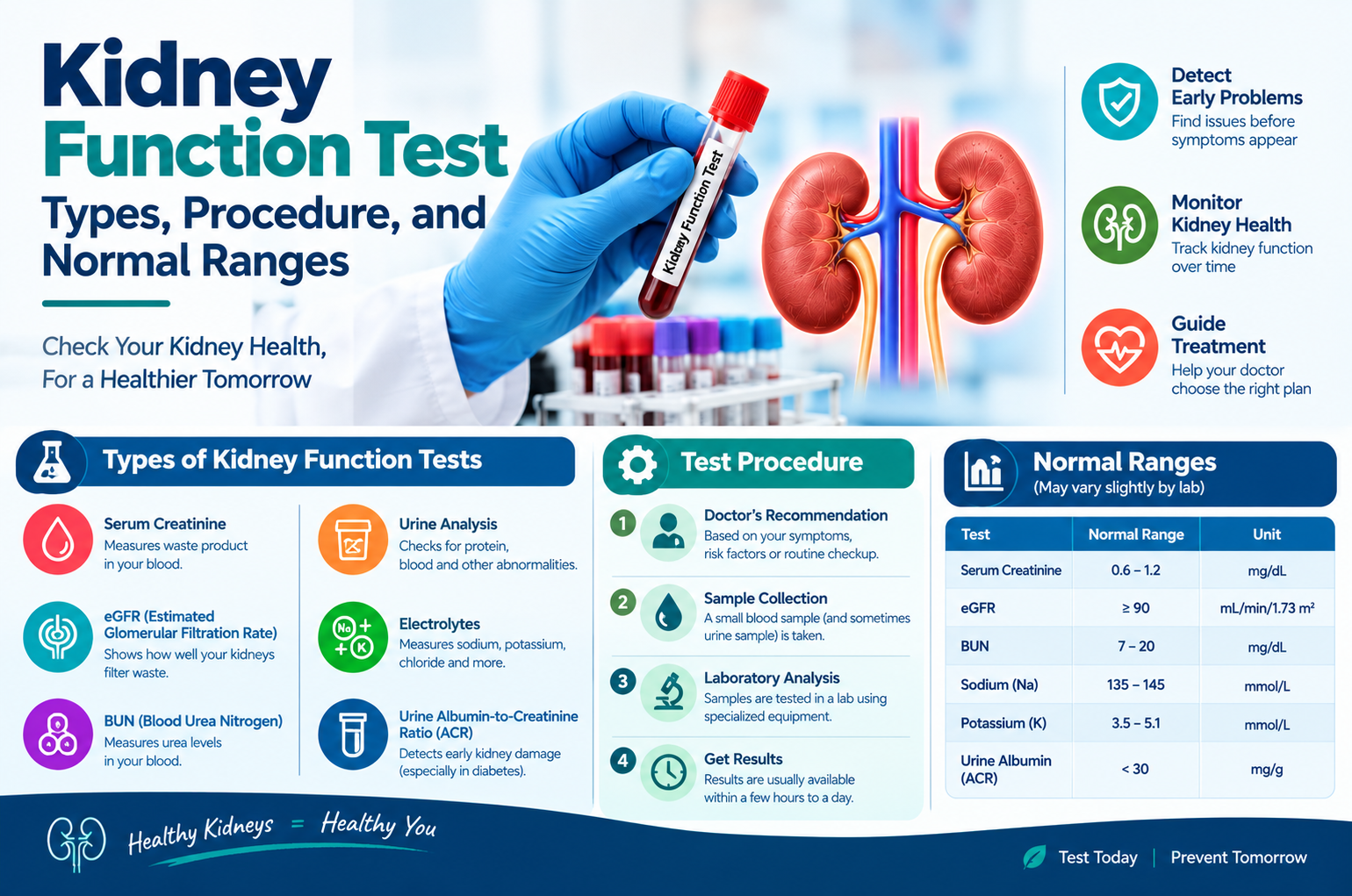
Kidney Function Test - Types, Procedure, and Normal Ranges

Your kidneys are your body’s natural filters. Every day, they remove waste and extra fluid from your blood, regulate blood pressure, and balance electrolytes.

A kidney function test helps doctors measure how well your kidneys are performing these vital roles.

If you’re experiencing fatigue, swelling, or changes in urination, your doctor may recommend a kidney function test to check for early signs of kidney disease, which can often develop silently.

This article breaks down everything you need to know: test types, normal ranges, procedures, and interpretation, so you can understand your kidney health clearly.

What Is a Kidney Function Test?

A kidney function test (also called a renal function test) is a set of blood and urine tests used to evaluate how well your kidneys are filtering waste, maintaining fluid balance, and regulating important minerals.

These tests measure substances like creatinine, urea, and electrolytes that accumulate when your kidneys aren’t functioning properly.

In simple terms, If your kidney function test results are abnormal, it may indicate early kidney disease, dehydration, or another underlying condition affecting kidney performance.

Why Is a Kidney Function Test Important?

The kidneys perform several essential functions:

  • Filtering waste and toxins from your blood
  • Balancing fluids and electrolytes (sodium, potassium, calcium)
  • Regulating blood pressure
  • Supporting red blood cell production via erythropoietin
  • Activating vitamin D for bone health

When your kidneys don’t work well, waste builds up in your body, leading to fatigue, swelling, and more serious complications such as chronic kidney disease (CKD).

Early Detection Saves Lives

According to the World Health Organization (WHO) and the National Kidney Foundation (NKF), early detection through a simple kidney function test can:

  • Prevent progression to kidney failure
  • Help manage diabetes or hypertension better
  • Reduce long-term health risks

Types of Kidney Function Tests

Blood Tests for Kidney Function

Serum Creatinine Test

  • Measures the amount of creatinine, a waste product from muscle metabolism.
  • High levels may indicate kidney dysfunction.
  • Normal range:
  • Men: 0.74–1.35 mg/dL
  • Women: 0.59–1.04 mg/dL

Estimated Glomerular Filtration Rate (eGFR)

  • Calculated using your serum creatinine, age, gender, and race.
  • Indicates how efficiently the kidneys are filtering blood.
  • Normal eGFR: 90 mL/min/1.73m² or higher
  • An eGFR below 60 suggests possible kidney damage.

Blood Urea Nitrogen (BUN)

  • Measures the amount of nitrogen in your blood that comes from urea, a waste product.
  • Normal range: 7–20 mg/dL

Electrolyte Tests (Sodium, Potassium, Calcium, Phosphate)

  • Imbalances can indicate kidney problems or dehydration.

Urine Tests for Kidney Function

1. Urinalysis

  • Detects protein, glucose, blood, and bacteria in urine.
  • Helps identify infections or kidney damage.

2. Urine Albumin-to-Creatinine Ratio (UACR)

  • Measures how much albumin (a protein) leaks into the urine.
  • Normal: <30 mg/g
  • Persistent high levels may indicate early kidney disease.

3. Hour Urine Collection Test

  • Measures total urine output and waste products over a day.
  • Useful for assessing kidney filtration and protein loss.

Normal Ranges for Kidney Function Tests

Test

Normal Range

Abnormal Range (Possible Concern)

Serum Creatinine

0.6–1.3 mg/dL

Above 1.5 mg/dL

eGFR

90+ mL/min/1.73m²

Below 60 = Kidney impairment

BUN

7–20 mg/dL

>25 mg/dL = Possible kidney issue

UACR

<30 mg/g

>30 mg/g = Kidney disease marker

Sodium

135–145 mEq/L

<130 or >150 mEq/L abnormal

(Sources: Mayo Clinic, National Kidney Foundation, NIH)

How to Prepare for a Kidney Function Test

  • Fasting: Usually not required unless combined with other tests.
  • Hydration: Drink water, but avoid excessive fluids before testing.
  • Medication Disclosure: Inform your doctor about medicines like antibiotics, NSAIDs, or blood pressure drugs.
  • Avoid Protein Supplements: They can temporarily affect creatinine levels.

Understanding Your Test Results

  • High Creatinine or Low eGFR: Indicates reduced kidney filtration.
  • High BUN: May mean kidney damage or dehydration.
  • Protein in Urine: Suggests early kidney disease or diabetes-related nephropathy.

Always consult a nephrologist for proper interpretation — one abnormal reading doesn’t always mean disease.

When Should You Get a Kidney Function Test?

You should consider a kidney test if you have:

  • Diabetes or hypertension
  • Family history of kidney disease
  • Persistent swelling in the ankles or feet
  • Changes in urination (color, frequency, or foaming)
  • Chronic fatigue or nausea

The American Diabetes Association recommends annual kidney testing for all diabetics.

Risk Factors for Kidney Disease

  • Uncontrolled diabetes or hypertension
  • Obesity
  • Smoking
  • Heart disease
  • Frequent painkiller use (NSAIDs)
  • Older age

According to the CDC, around 1 in 7 adults in the U.S. has chronic kidney disease, and most don’t know it.

How to Maintain Healthy Kidney Function

  • Stay hydrated
  • Control blood sugar and blood pressure
  • Limit salt and processed foods
  • Avoid smoking and alcohol
  • Exercise regularly
  • Get regular checkups, especially if at risk

Pro tip: Schedule routine tests at trusted diagnostic centers like Nephrocare India to monitor your renal health early.

A kidney function test is one of the simplest yet most powerful tools for detecting kidney disease early.

Regular testing ensures your kidneys stay healthy and can prevent serious complications.

If you experience symptoms like swelling, fatigue, or changes in urination, don’t delay.

Consult a nephrologist or visit a trusted diagnostic center like Nephrocare India for a comprehensive kidney function evaluation.

Medical Disclaimer

This article is for informational purposes only and should not replace medical advice, diagnosis, or treatment. Always consult a qualified healthcare provider for personalized guidance.

Frequently Asked Questions

Common questions about this health blog answered for you

It ranges from ₹400 to ₹1,200 depending on the lab and whether it includes eGFR or 24-hour urine testing.

Yes, many certified diagnostic providers offer home sample collection. However, interpretation should always be done by a qualified doctor.

An eGFR of 60 may indicate mild kidney impairment. Your doctor might suggest repeating the test after 3 months.

Results are typically available within 24 hours for blood tests and 48–72 hours for urine collection.

Yes, dehydration can temporarily raise creatinine and BUN levels, giving a false impression of kidney dysfunction.

Need Medical Consultation?

Our expert doctors are here to help you with personalized care.

Book Appointment
Kidney Function Test - Types, Procedure, and Normal Ranges | Nephro Care India