
Back to Health Blogs
Health Tips and Blogs

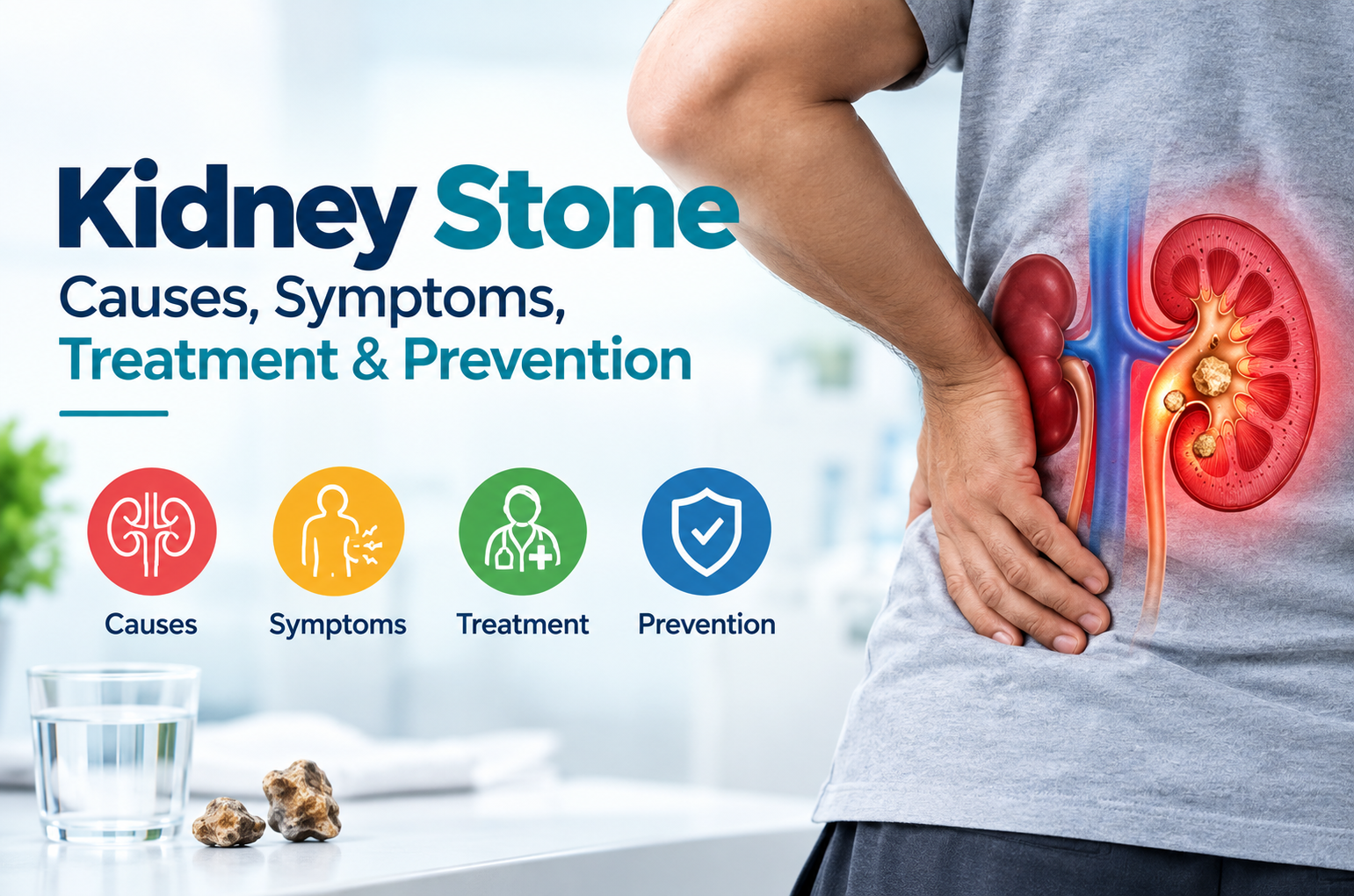
Kidney Stone - Causes, Symptoms, Treatment & Prevention

5 min read
A
Written ByAdmin
Kidney Stone - Causes, Symptoms, Treatment & Prevention

If you’ve ever experienced sudden, severe lower back pain that feels unbearable, you might already understand how serious a kidney stone can be. Kidney stones are not only painful but also increasingly common worldwide. Millions of people search for answers every year—What causes kidney stones? How do you get rid of them? Can they be prevented?

This in-depth, medically reviewed guide answers all of those questions in one place. Backed by trusted medical sources and written in clear, plain English, this article is designed to help you understand kidney stones fully and take informed steps to protect your health.

What Is a Kidney Stone?

A kidney stone (medically known as renal calculi or urinary stones) is a hard deposit made of minerals and salts that form inside the kidneys. These stones develop when urine becomes too concentrated, allowing minerals like calcium, oxalate, or uric acid to crystallize and stick together. Over time, these crystals can grow into stones that vary in size, from as small as a grain of sand to as large as a golf ball.

Kidney stones can remain in the kidney or travel down the urinary tract, causing intense pain and other symptoms

Types of Kidney Stones

Understanding the type of kidney stone you have is crucial for proper treatment and prevention.

1. Calcium Stones

  • Most common type (about 80%)
  • Usually made of calcium oxalate
  • Linked to dehydration, high-sodium diets, and certain metabolic disorders

2. Uric Acid Stones

  • Common in people with gout
  • Associated with high-protein diets
  • More frequent in men

3. Struvite Stones

  • Form after urinary tract infections (UTIs)
  • Can grow quickly and become very large
  • More common in women

4. Cystine Stones

  • Rare and genetic
  • Caused by a disorder that makes the kidneys excrete too much cystine

What Causes Kidney Stones?

Kidney stones develop when your urine lacks enough fluid to dilute minerals. Common causes include:

  • Dehydration
  • Excess salt (sodium) intake
  • High animal protein consumption
  • Obesity
  • Digestive diseases or surgery
  • Certain medications and supplements
  • Family history of kidney stones

According to the National Institute of Diabetes and Digestive and Kidney Diseases (NIDDK), low urine volume is the leading cause of kidney stone formation.

Risk Factors for Kidney Stones

You may be at higher risk if you:

  • Drink less than 2 liters of water daily
  • Live in a hot climate
  • Have a family history of kidney stones
  • Eat a high-sodium or high-sugar diet
  • Have conditions like diabetes, gout, or inflammatory bowel disease
  • Take high doses of vitamin C or calcium supplements without medical advice

Kidney Stone Symptoms

Small kidney stones may pass without symptoms. Larger stones can cause:

  • Severe pain in the back, side, or lower abdomen
  • Pain during urination
  • Blood in urine (pink, red, or brown)
  • Nausea and vomiting
  • Frequent urge to urinate
  • Cloudy or foul-smelling urine
  • Fever and chills (if infection is present)

Pain often comes in waves and shifts as the stone moves through the urinary tract.

When to See a Doctor

Seek immediate medical care if you experience:

  • Pain so severe you can’t sit still
  • Blood in urine
  • Fever with chills
  • Difficulty passing urine
  • Persistent vomiting

These may indicate complications such as infection or urinary blockage.

How Kidney Stones Are Diagnosed

Doctors use several methods to confirm kidney stones:

  • Imaging tests (CT scan, ultrasound, X-ray)
  • Urine tests to check mineral levels
  • Blood tests to assess kidney function
  • Stone analysis, if passed naturally

CT scans are considered the gold standard for diagnosis due to their high accuracy.

Kidney Stone Treatment Options

Treatment depends on stone size, type, and severity of symptoms.

Small Stones

  • Increased water intake
  • Pain relievers (NSAIDs)
  • Alpha blockers to relaxthe ureter muscles

Large Stones

  • Shock Wave Lithotripsy (SWL): Uses sound waves to break stones
  • Ureteroscopy: Removes stones using a thin scope
  • Percutaneous Nephrolithotomy: Surgical removal for very large stones

According to Mayo Clinic, most kidney stones can be treated without invasive surgery when diagnosed early.

Home Remedies & Pain Management

While medical treatment is essential, supportive care can help:

  • Drink water consistently throughout the day
  • Apply heat pads to relieve pain
  • Avoid sugary drinks
  • Follow doctor-recommended pain medication only

Avoid unproven herbal remedies without medical approval.

Diet & Lifestyle Changes for Prevention

Preventing kidney stones is often possible with simple lifestyle changes.

Hydration

  • Aim for urine that is pale yellow
  • Drink water evenly throughout the day

Diet Tips

  • Reduce salt intake
  • Limit red meat
  • Eat calcium-rich foods from natural sources
  • Avoid excessive oxalate-rich foods (spinach, nuts)

Lifestyle

  • Maintain a healthy body weight
  • Exercise regularly
  • Follow personalized dietary advice after stone analysis

The World Health Organization (WHO) emphasizes hydration as a key factor in kidney health.

Kidney Stones in Men vs Women

  • Men are more likely to develop kidney stones than women
  • Women are more prone to infection-related stones
  • Pregnancy increases kidney stone risk due to hormonal and anatomical changes

Complications of Untreated Kidney Stones

Ignoring kidney stones may lead to:

  • Chronic kidney disease
  • Recurrent urinary infections
  • Permanent kidney damage
  • Sepsis (life-threatening infection)

Early treatment significantly reduces long-term risks.

A kidney stone is a painful but manageable condition when addressed early. With proper diagnosis, effective treatment, and smart lifestyle choices, most people can recover fully and prevent recurrence. If you suspect kidney stones or experience severe symptoms, consult a qualified healthcare provider promptly.

Your kidneys play a vital role in your overall health—taking care of them today can prevent serious problems tomorrow.

Medical Disclaimer

This article is for informational purposes only and does not replace professional medical advice, diagnosis, or treatment. Always consult a qualified healthcare provider regarding any medical condition or treatment decisions.

Frequently Asked Questions

Common questions about this health blog answered for you

Yes, small kidney stones often pass naturally with adequate hydration.

It can take days to several weeks, depending on size and location.

Rarely, but complications like infection can be serious if untreated.

Water, citrus juices (like lemon water), and low-sugar fluids are beneficial.

Yes. About 50% of people may develop another kidney stone within 5–10 years without preventive measures.

Need Medical Consultation?

Our expert doctors are here to help you with personalized care.

Book Appointment
Kidney Stone - Causes, Symptoms, Treatment & Prevention | Nephro Care India