Back to Health Blogs
Health Tips and Blogs

Kidney Stone Symptoms: Early Signs, Pain, Diagnosis & Treatment

Kidney stones can cause some of the most severe pain known in medicine, often compared to childbirth. Recognizing the early symptoms of kidney stones is critical; early detection can prevent complications like infections, kidney damage, or urinary obstruction. In this guide, you’ll learn exactly how to identify kidney stone symptoms, where the pain typically occurs, how diagnosis is made, and what treatment options exist, all based on trusted sources such as the Mayo Clinic, National Kidney Foundation (NKF), and NIH.

5 min read
A
Written ByAdmin
Kidney Stone Symptoms: Early Signs, Pain, Diagnosis & Treatment

What Are Kidney Stones?

Kidney stones (medically called renal calculi) are hard mineral deposits formed inside your kidneys from substances like calcium, oxalate, or uric acid.

They can vary in size from a grain of sand to a golf ball, and when they move through the urinary tract, they cause intense pain and urinary problems.

According to the National Institute of Diabetes and Digestive and Kidney Diseases (NIDDK), around 1 in 10 people will experience a kidney stone during their lifetime.

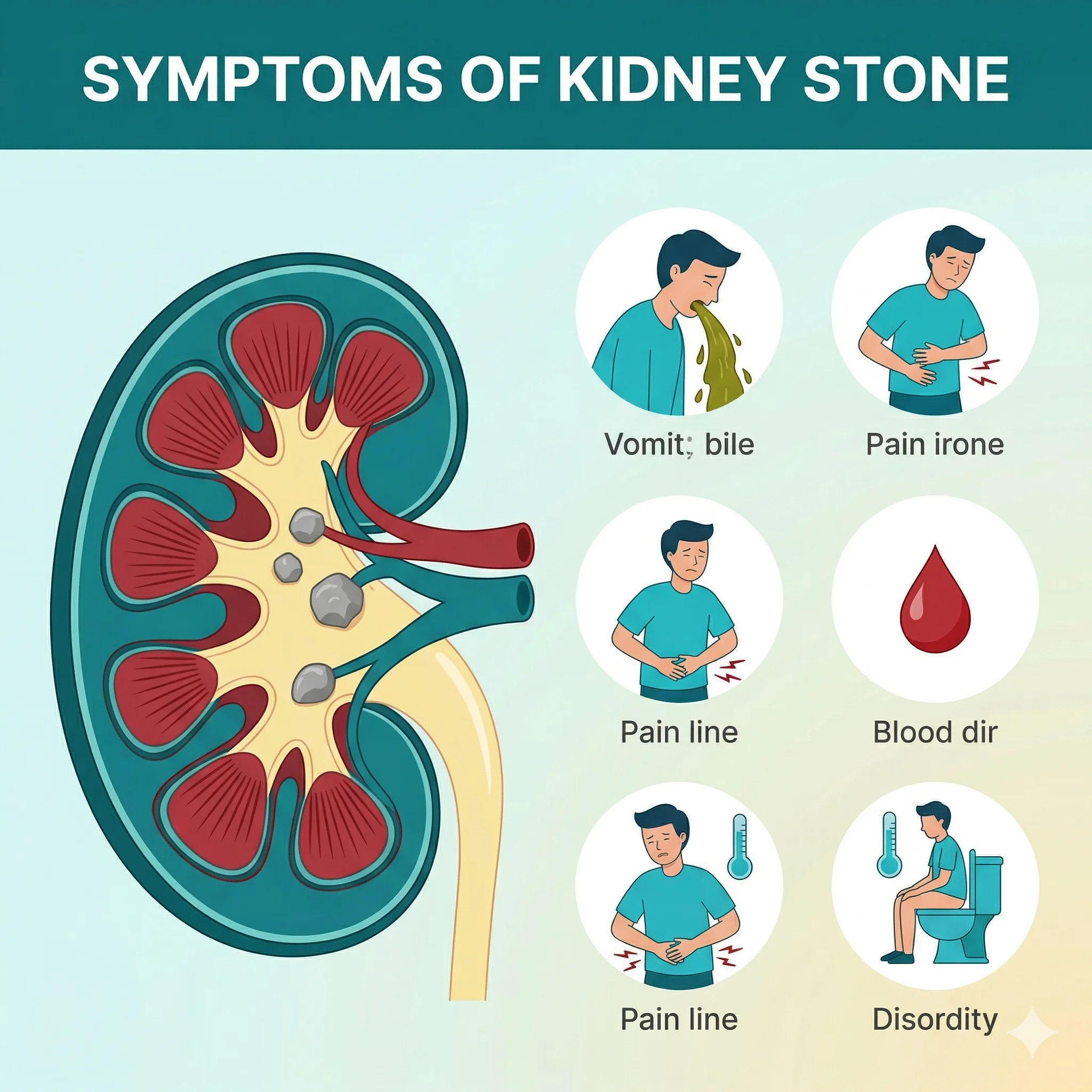
Common Symptoms of Kidney Stones

Kidney stone symptoms can vary depending on the stone’s size, location, and movement within the urinary tract.

Below are the hallmark signs and sensations you should watch for.

Severe Pain (Renal Colic)

The most recognized symptom is renal colic, sudden, sharp pain that comes in waves.

It often starts in the side or back (flank) and radiates to the lower abdomen or groin.

Pain may:

  • Come and go in intensity
  • Make it hard to find a comfortable position
  • Occur suddenly, even waking you from sleep

Clinical research (Cleveland Clinic, 2024) notes that pain peaks when the stone moves into the ureter, blocking urine flow.

Blood in Urine (Hematuria)

Another classic symptom is blood in the urine, giving it a pink, red, or brown tint.

This happens as the stone irritates or scratches the urinary tract lining.

  • Visible hematuria: Color change in urine
  • Microscopic hematuria: Detected only in lab tests

If bleeding is persistent or accompanied by clots, see a doctor immediately.

Frequent Urination or Urgency

You may feel the need to urinate more often than usual, especially if the stone is near the bladder.

Sometimes, only a few drops come out despite the strong urge.

This happens because the stone irritates the bladder wall or urethra, mimicking infection symptoms.

Pain During Urination

Burning or stinging sensations during urination can occur when the stone is in the lower urinary tract.

This can be confused with a urinary tract infection (UTI); both can co-exist, making it important to get tested.

Nausea and Vomiting

Severe pain from kidney stones often triggers nausea and vomiting due to the shared nerve connections between the kidneys and the gastrointestinal tract.

According to the Mayo Clinic, this is a common autonomic reaction to intense pain or obstruction.

Cloudy or Foul-Smelling Urine

This symptom usually indicates a secondary infection.

Bacteria in stagnant urine can multiply quickly when the urinary flow is blocked.

If your urine looks murky, thick, or smells bad, consult a urologist promptly.

Fever and Chills

A fever above 101°F (38.3°C) combined with chills can signal a kidney infection (pyelonephritis) a medical emergency.

Seek urgent medical help if this occurs alongside flank pain or difficulty urinating.

Where Does Kidney Stone Pain Occur?

Kidney stone pain can shift locations as the stone moves.

Typical progression:

  1. Flank or lower back pain – stone in the kidney
  2. Abdominal or groin pain – stone entering the ureter
  3. Genital or inner thigh pain – stone near the bladder

This migrating pain pattern helps doctors determine where the stone is lodged.

Stages of Kidney Stone Symptoms

Stage

Stone Location

Main Symptoms

Stage 1

Kidney

Dull back pain, mild discomfort

Stage 2

Upper ureter

Sharp flank pain, hematuria

Stage 3

Lower ureter

Groin pain, urinary urgency

Stage 4

Bladder

Frequent urination, burning

Stage 5

Passed in urine

Pain relief, possible small fragments in urine

When to See a Doctor

Seek medical attention immediately if you experience:

  • Pain so severe you can’t sit still
  • Blood in your urine
  • Fever and chills
  • Difficulty urinating or total blockage
  • Nausea or vomiting that prevents fluid intake

Even if symptoms subside, follow up with a doctor, stones can recur in 50% of patients within 5 years (NIH study, 2023).

How Kidney Stones Are Diagnosed

A doctor or urologist will perform several tests to confirm the diagnosis:

  1. Urinalysis – checks for blood, crystals, or infection
  2. Blood tests – measure calcium, uric acid, and kidney function
  3. Imaging
  • CT scan (non-contrast): gold standard for detection
  • Ultrasound: preferred for pregnant or pediatric patients

X-ray (KUB): for tracking known stones

Treatment Options for Kidney Stones

Treatment depends on the stone’s size, type, and symptoms.

1. Small Stones (≤5 mm)

  • Drink 2–3 liters of water daily
  • Take pain relievers (ibuprofen, naproxen) as advised
  • Alpha-blockers (like tamsulosin) can relax the ureter muscles to aid passage
  • Strain your urine to collect the stone for analysis

2. Large Stones (>5 mm)

May require medical intervention:

  • Shock Wave Lithotripsy (SWL): sound waves break stones into smaller pieces
  • Ureteroscopy: camera inserted via urethra to remove or laser-break stones
  • Percutaneous Nephrolithotomy (PCNL): surgical removal for very large or complex stones

The American Urological Association (AUA) recommends imaging follow-ups every 6–12 months post-treatment to prevent recurrence.

Preventing Kidney Stones

Kidney stone prevention focuses on hydration, diet, and lifestyle changes.

Tips:

  • Drink enough water to produce 2–2.5 liters of urine daily
  • Limit sodium and processed foods
  • Eat calcium-rich foods (not supplements)
  • Reduce intake of oxalate-rich foods: spinach, nuts, beets
  • Maintain a healthy body weight
  • Avoid excessive animal protein and sugary drinks

The National Kidney Foundation emphasizes hydration as the single most effective preventive measure.

Need Medical Consultation?

Our expert doctors are here to help you with personalized care.

Book Appointment
Kidney Stone Symptoms: Early Signs, Pain, Diagnosis & Treatment | Nephro Care India