Back to Health Blogs
Health Tips and Blogs

Kidney Stone Pain Area - Where It Hurts and What It Means

5 min read
A
Written ByAdmin
Kidney Stone Pain Area - Where It Hurts and What It Means

If you’ve ever experienced a sharp, stabbing pain in your lower back or abdomen, you may have wondered whether it’s a kidney stone. The kidney stone pain area is often described as one of the most severe types of pain a person can feel, even compared to childbirth.

But exactly where does kidney stone pain occur, and how can you tell it’s not something else, like muscle pain or an infection?

This comprehensive guide, reviewed with information from Mayo Clinic, Cleveland Clinic, and NIH, explains the pain areas, symptoms, and treatment options so you can understand and respond effectively.

Understanding Kidney Stones

Kidney stones are hard, crystal-like deposits that form when minerals such as calcium, oxalate, or uric acid build up in your urine.

When small, these stones may pass unnoticed. But larger ones can get stuck in the urinary tract, causing intense pain, bleeding, and infection if untreated.

There are several types:

  • Calcium stones (most common)
  • Uric acid stones
  • Struvite stones (linked to infections)
  • Cystine stones (rare genetic type)

Where Does Kidney Stone Pain Occur?

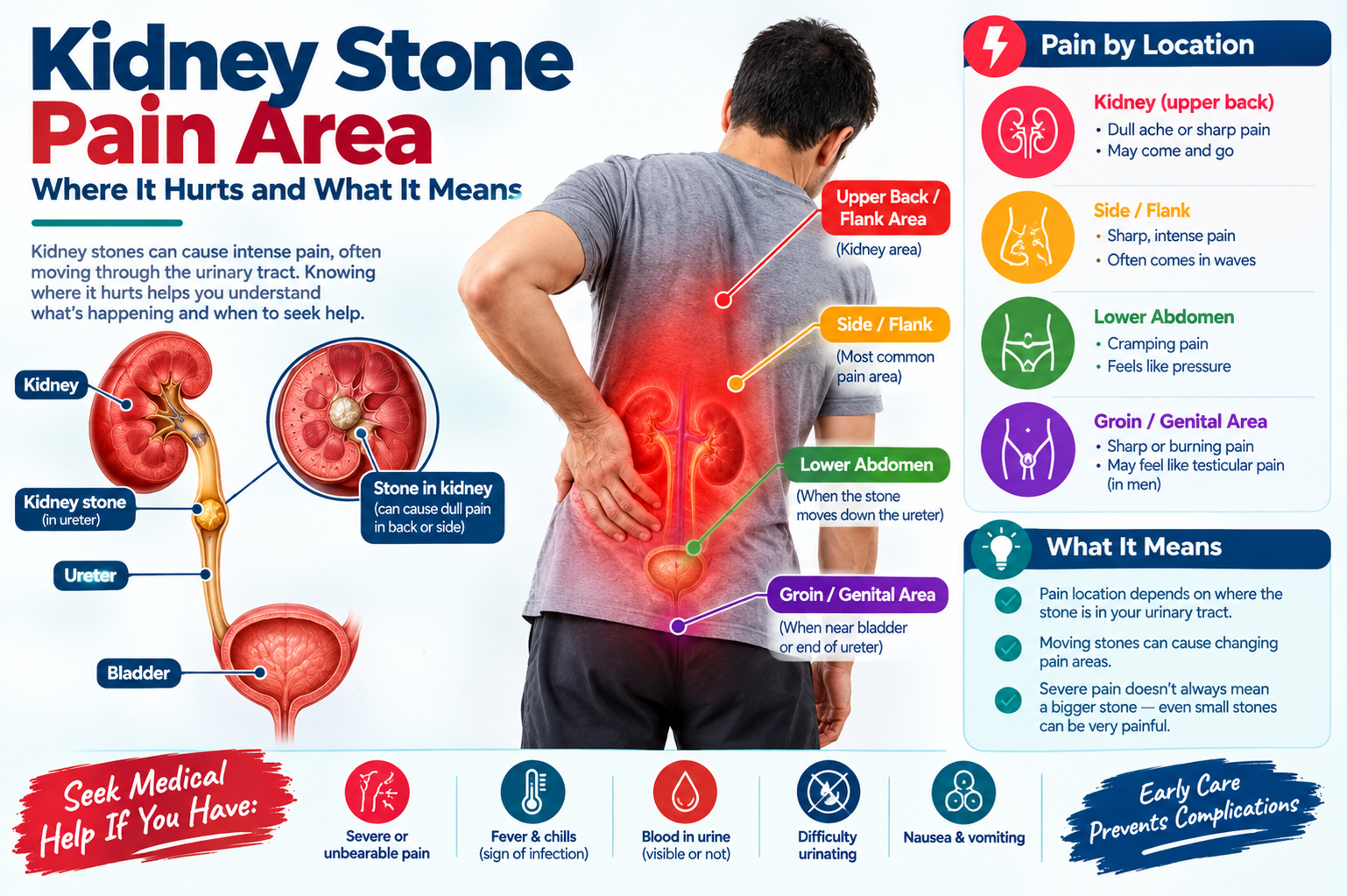
Kidney stone pain, medically called renal colic, can appear in multiple areas as the stone travels from the kidney to the bladder.

The location and type of pain depend on where the stone is lodged in the urinary tract.

Let’s explore the five main pain areas.

1. Flank or Lower Back Pain

This is the most common area of kidney stone pain.

  • Location: On one side of your lower back, just below the ribs.
  • Type of Pain: Sharp, cramping, or throbbing; may come in waves.
  • Reason: The stone is usually stuck in the renal pelvis or upper ureter, causing pressure buildup.

Patients often describe it as a deep ache radiating toward the front of the abdomen.

2. Abdominal Pain

As the stone moves lower into the ureter, pain can shift toward the abdomen.

  • Location: Lower abdomen, near the belly button or sides.
  • Type of Pain: Constant, sharp, or spasmodic pain that comes and goes in waves.
  • Reason: The ureter contracts strongly to push the stone forward.

This pain can mimic conditions like appendicitis or gastrointestinal cramps, so diagnosis is key.

3. Groin and Genital Pain

When the stone nears the bladder or lower ureter, pain may radiate into the groin, testicles (in men), or labia (in women).

  • Location: Groin, inner thigh, or genital area.
  • Type: Deep, stabbing, or burning pain.
  • Reason: Nerves from the lower urinary tract overlap with pelvic nerve pathways.

4. Pain During Urination

Once the stone enters the bladder or urethra, it may cause:

  • Burning or stinging sensation while urinating.
  • Urgent or frequent need to urinate.
  • Visible blood in urine (hematuria).

At this stage, the pain may reduce slightly as the stone moves closer to being expelled.

5. Pain That Moves

One key feature of kidney stone pain is that it moves.

It can start in the back, shift to the abdomen, then radiate to the groin as the stone progresses through the urinary tract.

This “traveling pain” is a hallmark symptom doctors look for.

Why Kidney Stone Pain Moves

The ureter, a narrow tube connecting each kidney to the bladder, is lined with smooth muscle.

When a stone gets stuck, the ureter contracts rhythmically in an attempt to dislodge it a process called peristalsis.

This muscular movement is what causes the pain to shift from one area to another, mirroring the stone’s journey.

According to Johns Hopkins Medicine, this pain is “colicky,” meaning it comes in waves as the body tries to push the stone through.

How to Tell If It’s Kidney Stone Pain or Something Else

Because kidney stone pain overlaps with other conditions, here’s how to differentiate:

Condition

Pain Location

Other Symptoms

Kidney Stones

Flank → Abdomen → Groin

Blood in urine, nausea, and moving pain

Urinary Tract Infection (UTI)

Bladder/pelvic area

Burning urination, cloudy urine

Muscle Strain

Localized in the back

Pain worsens with movement

Appendicitis

Lower right abdomen

Fever, vomiting, localized pain

Gallstones

Upper right abdomen

Pain after eating fatty foods

If pain is severe, persistent, or accompanied by fever, seek medical care immediately.

Associated Symptoms of Kidney Stones

Beyond pain, patients may also experience:

  • Nausea or vomiting
  • Frequent urination
  • Cloudy or foul-smelling urine
  • Blood in urine (red, pink, or brown tint)
  • Fever or chills (possible infection)

When to See a Doctor Immediately

Call your doctor or visit an emergency department if you experience:

  • Intense flank or abdominal pain that doesn’t improve
  • Fever above 101°F (38°C)
  • Vomiting or dehydration
  • Difficulty passing urine
  • Blood in urine

Untreated stones can cause urinary obstruction, infection, and even kidney damage.

Diagnosis: How Doctors Locate the Pain Source

To confirm that the pain is caused by kidney stones, healthcare providers use:

  • Imaging Tests:
  • CT scan (most accurate)
  • Ultrasound (safe for pregnant women)
  • X-ray (KUB)
  • Urinalysis: Detects blood, infection, or crystals.
  • Blood Tests: Check kidney function and mineral balance.

Treatment and Pain Relief Options

Treatment depends on the stone size, location, and severity of pain.

Medications

  • Pain relievers: Ibuprofen, naproxen, or prescription NSAIDs.
  • Alpha-blockers (e.g., tamsulosin): Help relax the ureter muscles to ease stone passage.
  • Antibiotics: If infection is present.

Always consult a urologist before taking any medication.

Home Remedies & Lifestyle Tips

  • Hydration: Drink 2–3 liters of water daily.
  • Lemon juice and citrate supplements: May help dissolve calcium stones.
  • Limit salt and oxalate-rich foods, Such as spinach, nuts, and tea.
  • Exercise: Gentle movement can help stones pass.

Avoid “miracle cures”; evidence-based management under medical supervision is best.

Surgical or Medical Procedures

If the stone doesn’t pass naturally, doctors may recommend:

  • Shock Wave Lithotripsy (SWL): Breaks stones into smaller pieces.
  • Ureteroscopy: Minimally invasive removal using a scope.
  • Percutaneous Nephrolithotomy: For large or complex stones.

These procedures are safe and highly effective when performed by specialists.

Preventing Future Kidney Stone Pain

  • Stay hydrated – 8–10 glasses of water daily.
  • Maintain a balanced diet low in sodium and animal protein.
  • Monitor calcium intake – don’t over-restrict; consult your doctor.
  • Avoid dehydration, especially in hot climates.
  • Regular check-ups if you’ve had stones before.

According to NIH, people who have had one stone have a 50% chance of recurrence within 5–10 years without prevention.

The kidney stone pain area extends from the flank and lower back to the abdomen and groin, depending on the stone’s journey through the urinary tract.

Recognizing this pattern of pain along with symptoms like nausea, blood in urine, and urinary changes can help you seek timely care.

If you suspect kidney stones, consult a nephrologist or urologist. Early diagnosis ensures faster relief and prevents long-term kidney damage.

Medical Disclaimer

This article is for educational purposes only and is not a substitute for medical diagnosis or treatment.

Always consult a qualified healthcare provider if you suspect kidney stones or experience severe pain.

Frequently Asked Questions

Common questions about this health blog answered for you

It usually starts in the flank or lower back and moves toward the abdomen or groin as the stone travels down.

Yes, if stones are present in both kidneys or ureters, bilateral pain may occur.

Yes. The pain often occurs in waves as the body attempts to push the stone through the urinary tract.

It can last from a few hours to several days, depending on the size and location of the stone.

Absolutely. As the stone nears the bladder, pain may shift toward the groin or genital region.

Need Medical Consultation?

Our expert doctors are here to help you with personalized care.

Book Appointment
Kidney Stone Pain Area - Where It Hurts and What It Means | Nephro Care India